DJEDI: What I Learned About Filmmaking, AI, and the Future of Young Creators in Africa
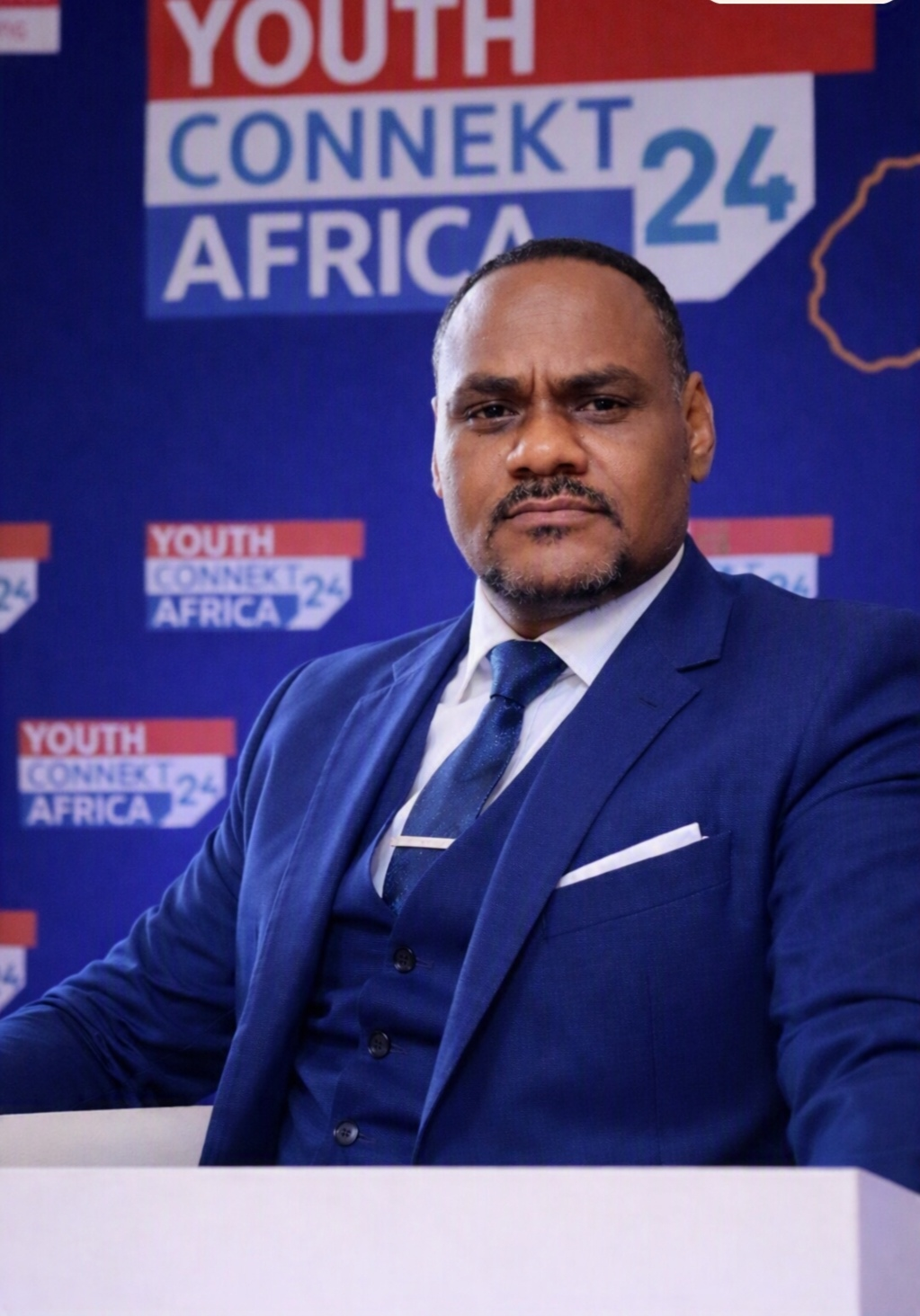
By Muawia Ismail Ibrahim
Sudanese Filmmaker & Director
When I started working on DJEDI, I was not trying to prove that artificial intelligence could make a film.
I was trying to answer a question that had been on my mind for some time:
If a filmmaker does not have access to a large studio, a large production team, or a large budget, can AI help him bring an ambitious idea to life?
For me, this was not an abstract question. I am a filmmaker from Sudan, and like many independent creators from developing countries, I know what it means to have ideas that are much bigger than the resources available to produce them.
That is one of the reasons I decided to make DJEDI.
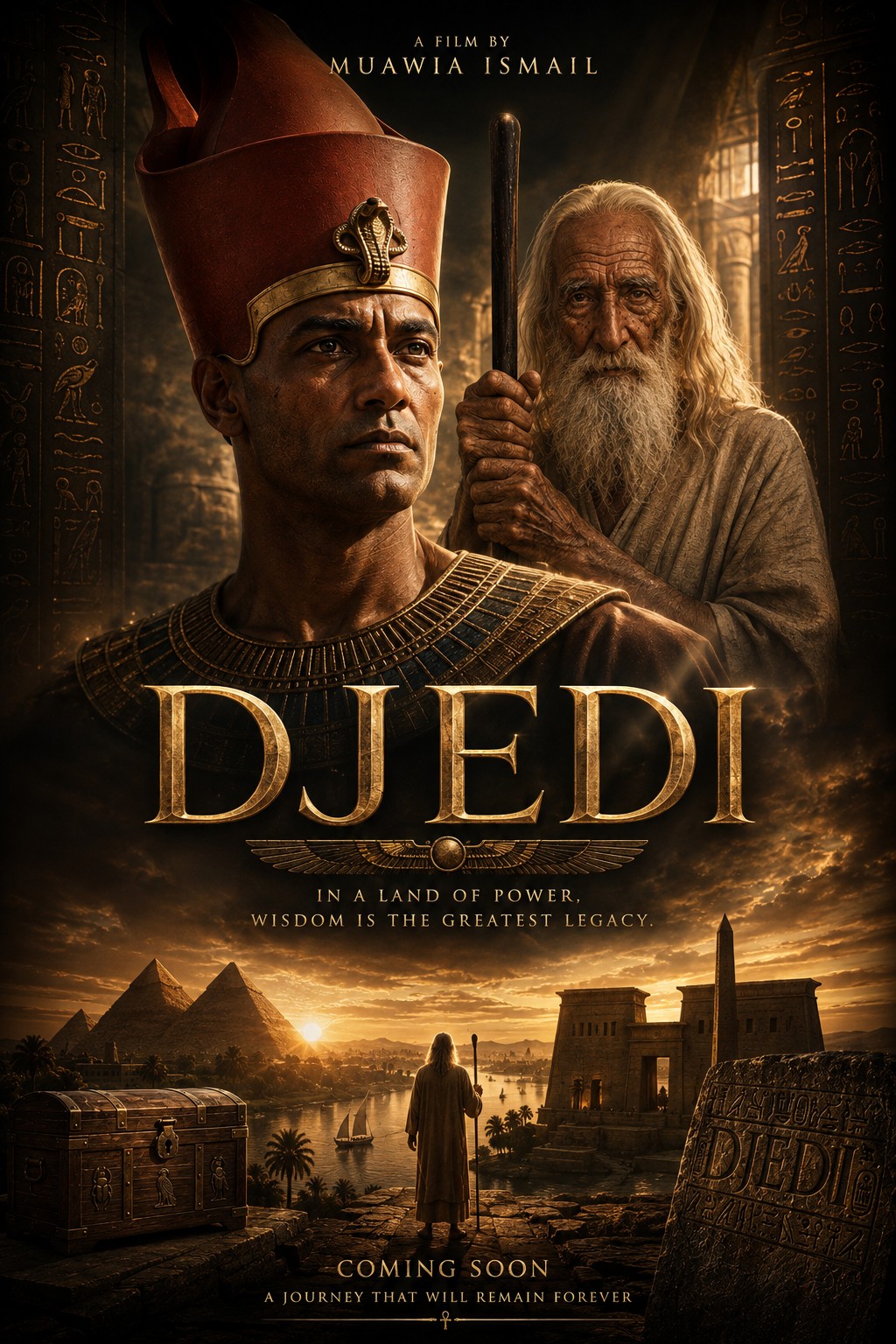
The film takes its inspiration from the ancient Egyptian story of Djedi and the Westcar Papyrus. I was attracted to the story because of its connection to wisdom, knowledge, power and the imagination of the ancient world.
But there was another reason.
I wanted to see what would happen if I brought an ancient story into a completely new production environment—one shaped by generative AI.
I did not want AI to become the filmmaker
One thing became clear to me very early in the process: I did not want to hand the creative responsibility over to AI.
For me, the filmmaker must remain at the center.
AI can help me explore a character. It can help me visualize a location. It can help me experiment with a scene or an atmosphere. It can accelerate parts of the production process.
But it cannot answer the most important question:
Why am I telling this story?
That answer has to come from the filmmaker.
This is how I approached DJEDI. I used generative AI as part of my filmmaking process, but the story, direction, choices, revisions and overall vision remained my responsibility.
I think this distinction is important because there is sometimes a tendency to talk about AI as if the technology itself is the creator.
I don't see it that way.
A camera does not make a filmmaker.
Editing software does not make a director.
And an AI model does not automatically make someone a storyteller.
The human being still has to decide what is worth saying.
Why DJEDI mattered to me
Making a historical film is not easy.
When the story takes place thousands of years ago, almost everything has to be imagined and constructed: the environment, architecture, costumes, characters, atmosphere and many other visual details.
For a major production, this can require enormous resources.
As an independent filmmaker, I could not approach the project in the same way a major studio would.
So I asked myself: Can I find another way?
AI gave me that possibility.
Not an easy solution. Not a magic button.
A possibility.
It allowed me to experiment with visual ideas that would have been very difficult for me to explore through conventional production methods.
That experience changed the way I think about filmmaking.
I began to see AI less as a piece of software and more as a new kind of creative infrastructure.
It can give an independent filmmaker a starting point.
And sometimes, having a starting point is the difference between an idea remaining in your notebook and becoming an actual film.
The bigger question is not filmmaking
After working on DJEDI, I started thinking about something beyond cinema.
If AI can lower some of the barriers to filmmaking, what else can it do for a young person in Sudan?
This question is particularly important to me because Sudan has a very large number of talented young people, but many of them do not have access to the opportunities they deserve.
The traditional job market cannot absorb everyone.
Creative industries are still developing.
Many young people are looking for ways to work remotely and earn income using digital skills.
This is where I believe AI deserves serious attention.
Not because it will solve everything, but because it can give people another set of tools.
A young person who learns AI-assisted video production could work with clients outside Sudan.
Another could offer graphic design or visual development services.
Someone else could use AI for translation, education, marketing, application development, research or digital content.
There is also an opportunity to build businesses around these skills.
For me, this is where the conversation should move—from AI literacy to AI entrepreneurship.
It is not enough to teach young people what an AI tool does.
We should also teach them how to use it to create something that people are willing to pay for.
Africa should not only consume AI
There is another issue that I think we need to discuss.
Africa is often described as a future market for new technologies.
I would like to see a different description.
I want to see Africa become a place where new technologies are used to create.
There is a huge difference between the two.
We have our own histories, languages, cultures and stories. Sudan alone has thousands of stories that remain largely unknown outside the region.
Technology can help us tell some of them.
This is one of the reasons I am interested in AI filmmaking.
I don't want AI to make African stories look more Western.
I want African creators to have more control over how their stories are imagined and presented.
A Sudanese filmmaker should be able to make a film about Sudanese history.
A young Nigerian creator should be able to develop stories rooted in Nigerian culture.
The same should be true across the continent.
The technology is global.
The stories do not have to be.
Could AI become a source of income for young Sudanese?
I believe the answer is yes, but only if we approach the issue realistically.
AI itself is not a job.
Knowing how to write a prompt is not automatically a profession.
The real value comes when AI is combined with a useful skill.
A filmmaker who understands storytelling can use AI to increase his production capacity.
A designer can use it to explore ideas faster.
A teacher can use it to develop educational materials.
A programmer can use it to accelerate development.
An entrepreneur can use it to test products and ideas.
In other words, the opportunity is not simply to become an "AI user."
It is to become a person who can use AI to solve problems and create value.
That is a much more sustainable way of thinking about the future.
And for young people in countries with limited employment opportunities, the ability to work digitally across borders could become increasingly important.
What I hope DJEDI represents
I do not claim that DJEDI provides the answer to all of these questions.
It is one film.
One experiment.
One experience.
But I hope it contributes to a larger conversation.
I hope it shows another young creator that you do not always have to wait until you have perfect conditions before you start creating.
Sometimes you have to start with what you have.
Learn.
Experiment.
Make mistakes.
Improve the work.
And keep going.
That is how I approached DJEDI.
The project taught me as much about the future of filmmaking as it did about the past that I was trying to portray.
A personal message to young creators
If I could give one piece of advice to young creators in Sudan and elsewhere in Africa, it would be this:
Don't learn AI just because everyone is talking about it. Learn it because you have something you want to build.
Start with the problem.
Start with the story.
Start with the skill you already have.
Then ask how AI can help you do more with it.
For me, that meant filmmaking.
For someone else, it may be education, business, design, music, software or something we have not even imagined yet.
The important thing is not the tool itself.
It is what we decide to do with it.
Looking beyond DJEDI
My journey with AI filmmaking is still at an early stage.
DJEDI is not the end of that journey. It is part of it.
I am interested in seeing where this technology can take independent filmmaking, but I am equally interested in what it can mean for young people in Sudan and Africa more broadly.
If we can build communities where young people learn AI, share knowledge, develop practical skills and connect with international markets, then the impact could go far beyond individual films or individual projects.
It could become part of a new digital creative economy.
That is the possibility that excites me most.
Not a future where AI replaces human creativity.
A future where more people finally have the tools to express theirs.
And perhaps this is the most important lesson I took from making DJEDI:
The real power of AI is not that it can create things for us. It is that it can help more people create things that once seemed impossible.
About the Author
Muawia Ismail Ibrahim is a Sudanese filmmaker, writer, producer, and AI Prompt Engineering specialist. His work focuses on AI-assisted filmmaking, generative AI, digital storytelling, historical narratives, African heritage, visual development, and creative technology.
He is the writer and director of DJEDI, an AI-assisted historical film inspired by the ancient Egyptian tradition surrounding Djedi and the Westcar Papyrus. His work also explores how emerging technologies can create new opportunities for young people and independent creators in Sudan and Africa.
Comments · 0
Sign in to comment.